
In recent years, the ransomware landscape has undergone a significant evolution. Previously, a ransom demand of $70 million was considered extraordinary. However, today, demands have climbed to a staggering $240 million, as demonstrated in late 2021 by the bold negotiation between the Hive ransomware group and MediaMarkt, Europe’s leading consumer electronics retailer in Germany.
While these astronomical figures are alarming, it is essential to understand that the ransom amount is only a fraction of the total cost associated with a ransomware attack. The mid-market sector, often overshadowed by multi-million dollar demands that make headlines, is particularly vulnerable. Here, ransoms around $1 million are commonplace, and affected organizations often lack the robust infrastructure needed for rapid recovery. The multifaceted costs associated with cyberattacks must also be taken into account.
The first cost of a ransomware attack: the ransom payment
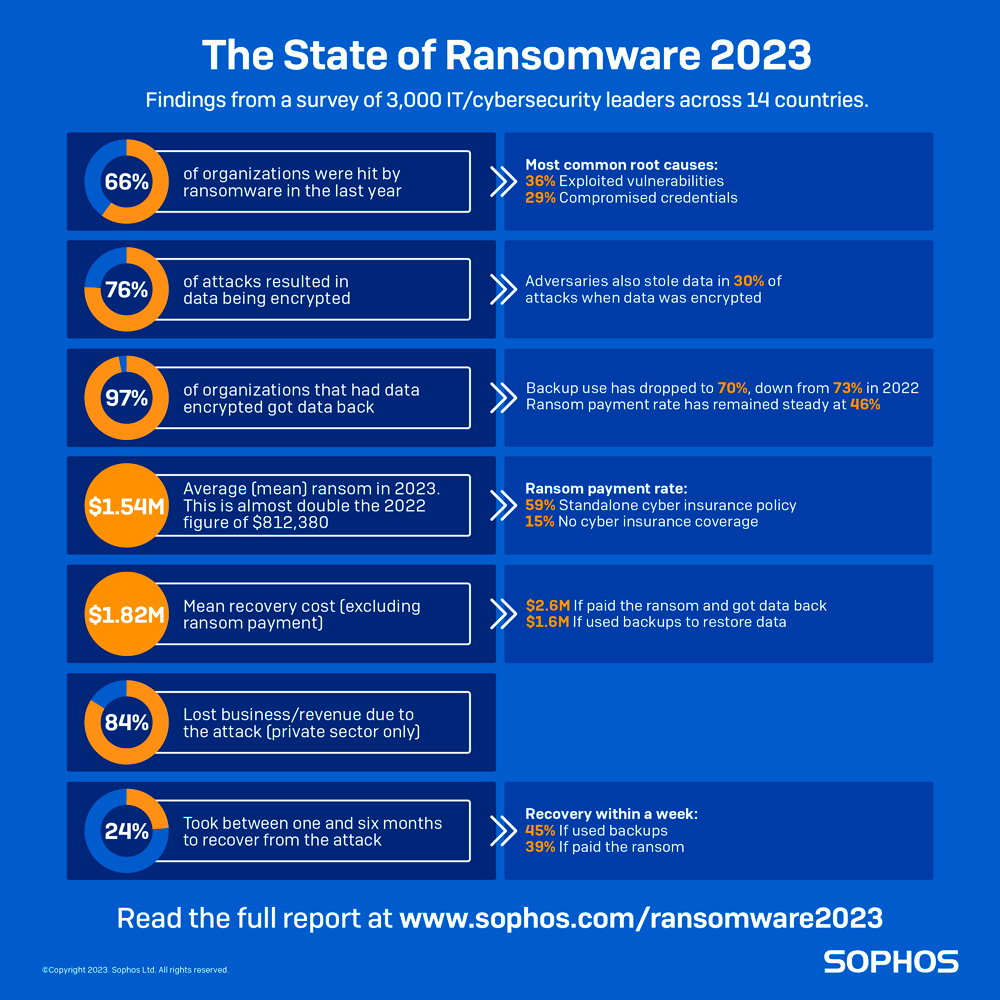
According to the Sophos State of Ransomware 2023 report, which surveyed 3,000 IT decision-makers across 14 countries, the average ransom payment reached $1.54 million. This figure is nearly double the 2022 average of $812,380 and ten times higher than the 2020 average of $170,404. Another study by Coveware, a renowned security consulting firm, found that the average ransom payment for the second quarter of 2023 was $740,144, also marking a sharp increase compared to previous quarters. These rising figures underscore the growing financial burden of ransomware attacks. However, it is strongly advised against paying the requested ransom.
Beyond the ransom: the hidden costs of a ransomware attack
Business downtime
One of the most immediate and tangible impacts of a ransomware attack is downtime. When systems are compromised, operations grind to a halt, resulting in substantial revenue losses. Productivity also suffers, as employees are unable to access essential resources, leading to delays in deadlines and disruptions to workflows. Coveware data reveals that the average downtime in the second quarter of 2022 was 24 days, which is alarming in itself. Furthermore, Sophos found that more than half of the organizations surveyed took over a month to recover from the attack.
Lost work hours due to business disruption
Following an attack, organizations often redirect a significant portion of their resources toward recovery. The IT team works tirelessly to restore systems, while the marketing and communications departments manage crisis communications. Companies without dedicated IT departments are often forced to turn to specialized providers to recover their data. At the same time, the finance department may engage in negotiations with the attackers, and the HR team addresses employee concerns. The cumulative hours devoted to recovery are substantial and should not be overlooked.
The investment needed in better cybersecurity
After a ransomware attack, it is common for companies to allocate more funds to strengthen their cybersecurity defenses. As cyber threats continue to evolve, insurance providers are also tightening their coverage requirements, pushing companies to update their systems.
The threat of repeat attacks
Surviving a ransomware attack does not guarantee immunity from future threats. In fact, paying a ransom can unintentionally signal an organization as an easy target for cybercriminals. Vulnerabilities that remain unaddressed can be exploited by other attackers, leading to repeat incidents.
Rising insurance premiums
The growing frequency and severity of ransomware attacks have pushed insurance providers to recalibrate their risk assessment models. As a result, many companies are now facing higher insurance premiums.
Legal implications and administrative penalties
Ransomware attacks that affect consumers or customers can lead to legal consequences. Companies such as UKG, Target, and Home Depot have all paid out millions of dollars in settlements following personal data breaches. Even when a company’s security practices are robust, it is often more cost-effective to settle damages with affected individuals than to endure a lengthy legal battle.
Reputational damage and lost business opportunities
Ransomware attacks that make headlines and attract public attention can seriously damage a company’s reputation, leading to a loss of trust among customers and stakeholders. Rebuilding this trust is a long and arduous process, requiring transparent communication, proactive security improvements, and a commitment to regaining confidence. Ultimately, the impact of reputational damage goes beyond financial losses, as it can significantly affect an organization’s long-term viability and market competitiveness.
The importance of recovering your data and having a proactive defense against ransomware
The ransomware industry shows no signs of slowing down, and the costs associated with recovery can be crippling for unprepared businesses. Recognizing the potential financial strain of a ransomware attack underscores the importance of investing in robust security protocols and disaster recovery plans.